The latest AI news and trends in 2026 are defined by one shift: models no longer just answer questions, they carry out multi-step work through tools, code, and software interfaces. If you follow only one thread, follow that one, because it changes what you should build, buy, and learn.
Are you wondering which headlines actually matter and which are noise? I’ll sort them below, and I’ll stay with things that are documented. Where a detail is unannounced or still moving, I’ll say so plainly.
Key Takeaways
- Agentic AI, meaning models that plan and act across several steps, is the dominant theme of 2026.
- Reasoning models trade speed and cost for better answers on hard problems, so they are not always the right pick.
- Open-weight models have narrowed the gap with closed ones, which changes build-versus-buy decisions.
- Regulation is now a calendar item, especially the EU AI Act’s phased obligations.
- Fundamentals like evaluation, data quality, and Python still beat chasing every release.
Table of Contents
- What are AI agents and why do they dominate 2026?
- Reasoning models and the cost of thinking
- AI coding tools in everyday engineering
- Open-weight models versus closed APIs
- AI regulation in 2026
- Common misconceptions
- How to keep up without burning out
- FAQ
What Are AI Agents and Why Do They Dominate 2026?
An AI agent is a language model wrapped in a loop that lets it plan, call tools, read the results, and decide what to do next. Instead of returning one reply, it works toward a goal across many steps, such as fixing a failing test or filing a support ticket.
The practical change in 2026 is that agents moved from demos into daily tooling. Coding assistants, browser-driving assistants, and workflow automation products now ship with agent modes as a headline feature. Standards helped. Anthropic’s Model Context Protocol, introduced in late 2024, gave tools a common way to expose data and actions to models, and other vendors adopted it afterward.
The trade-off is reliability. Each step in a chain can fail, and errors compound. A tool that is right 95 percent of the time per step is noticeably shaky over a twenty-step task, which is simple arithmetic rather than a vendor claim. That is why teams keep a human approval step on anything that touches money, production data, or customers.
Where agents work well today
Narrow, verifiable tasks do best. Code changes that can be checked by a test suite, data cleanup with clear rules, and research summaries with citations you can click are good fits. Open-ended jobs with no clear success test remain risky.
Reasoning Models and the Cost of Thinking
Reasoning models are language models trained to spend extra compute generating intermediate steps before they answer. OpenAI’s o1 series popularized the approach in 2024, and DeepSeek-R1, released in January 2025 with open weights, showed that the technique could be reproduced outside the big closed labs.
You pay for that thinking. Reasoning models generally respond more slowly and cost more per query, because they produce many more tokens. For classification, short rewriting, or simple extraction, a smaller standard model is usually the better choice. Save the reasoning tier for math, multi-file debugging, planning, and tricky analysis.
A sensible routing pattern is to send everything to a cheap model first and escalate only when a check fails. It keeps the bill sane without giving up quality where it counts.
AI Coding Tools in Everyday Engineering
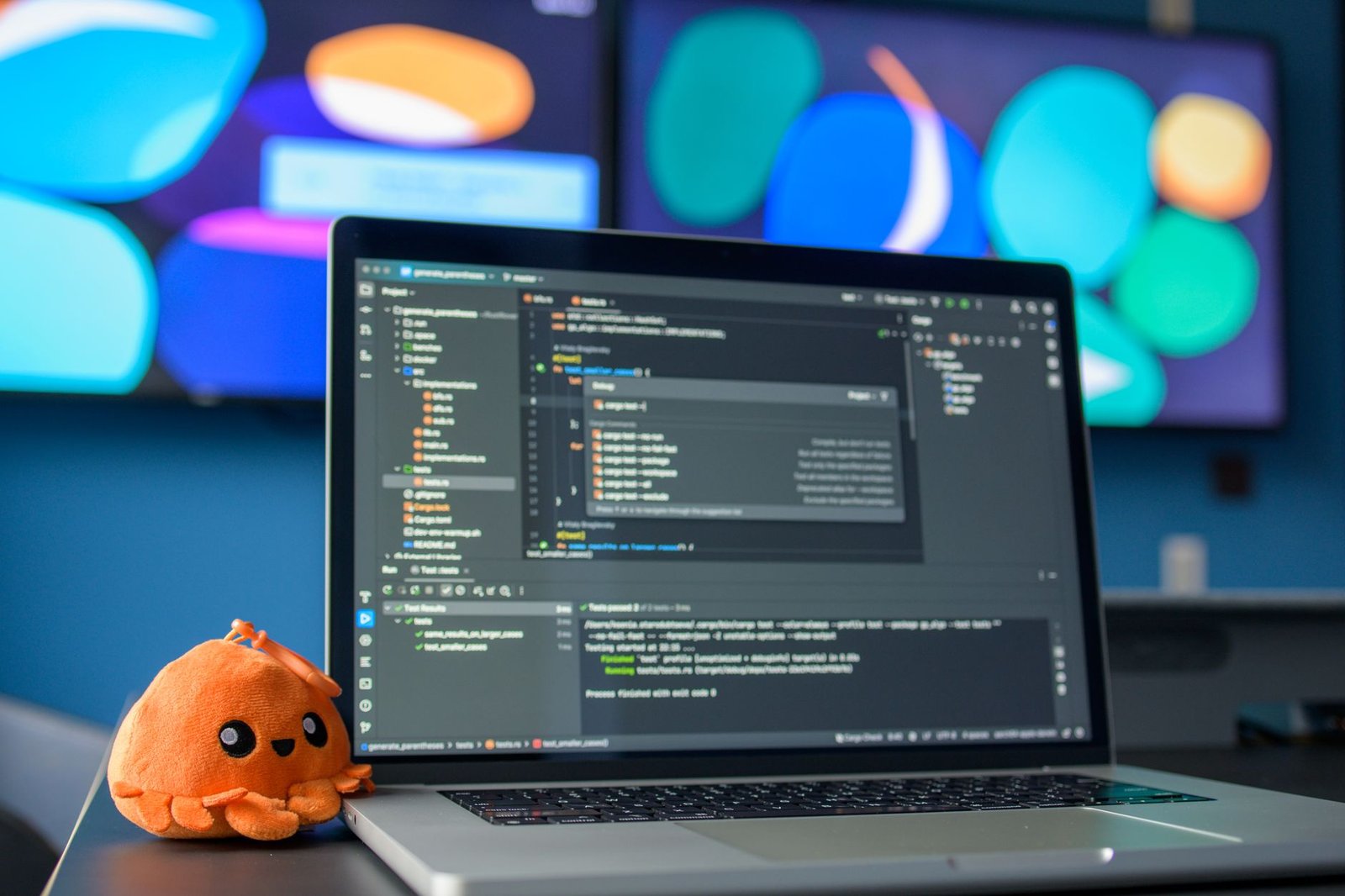
AI coding tools are assistants that autocomplete, refactor, explain, and increasingly execute tasks inside your editor or repository. Cursor, GitHub Copilot, and Anthropic’s Claude Code are the names you will hear most, and all three now offer some form of agent workflow.
The evidence on productivity is mixed, and that deserves attention. A 2025 randomized trial by the research group METR found that experienced open-source developers working on their own mature repositories took longer with AI tools than without them, even though they expected to go faster. The finding does not mean the tools are useless. It means the gains depend on the task, the codebase, and how disciplined the review is.
My advice: use them hardest on boilerplate, tests, migrations, and unfamiliar libraries. Slow down on core architecture, where a confident wrong answer costs the most. If you work on servers and APIs, our guide to Productive AI tools for backend developers in 2026 Goes through specific workflows, and the broader list of Trending AI tools for programming Covers the editor side.
Open-Weight Models Versus Closed APIs
Open-weight models are models whose trained parameters you can download and run yourself, usually under a license with some conditions. Meta’s Llama family, Mistral’s releases, Alibaba’s Qwen models, and DeepSeek’s models are the best-known examples.
For many workloads, an open-weight model on your own hardware is now good enough, and that shifts the decision from capability to operations. Self-hosting gives you data control, predictable cost at high volume, and the option to fine-tune. It also hands you the burden of GPUs, serving software such as vLLM, monitoring, and security patches.
A quick decision table
| Situation | Better fit |
|---|---|
| Prototype, low volume, need top capability | Closed API |
| Strict data residency or privacy rules | Open weights, self-hosted |
| Millions of simple requests a day | Smaller open model you tune yourself |
| Small team, no infrastructure staff | Closed API or managed hosting |
Note that “open weights” is not the same as open source. Training data and code are often withheld, and licenses can restrict commercial use at scale. Read the license before you build a product on it.
AI Regulation in 2026
The EU AI Act is the first broad legal framework for AI in a major economy, and its obligations arrive in phases. In practice, the Act entered into force in August 2024, bans on certain practices applied from February 2025, and rules for general-purpose AI models began in August 2025. Many remaining requirements follow in 2026 and beyond, though the exact timing of some high-risk provisions has been under discussion, so check the official source for current dates.
If you ship AI features to European users, this matters even when your company sits elsewhere. Expect to document training data summaries, risk classification, and human oversight. Outside the EU, the picture is a patchwork of national policies and US state laws, and it keeps changing.
The official overview lives on the European Commission digital strategy site, and I would bookmark it rather than trust any blog’s summary, including this one.
Common Misconceptions About the Latest AI Trends
Bigger always means better
Scale still helps, but the gains of 2025 and 2026 came heavily from better training methods, reasoning-time compute, and tool use. A well-prompted small model with retrieval often beats a larger one working from memory on company-specific questions.
Agents will replace developers next year
The METR result above is a useful corrective. Agents are strong at well-defined chores and weak at ambiguous requirements, which is most of what senior engineers actually handle.
Benchmarks tell you which model to pick
Public leaderboards such as LMArena and coding benchmarks like SWE-bench are useful signals, but models can be tuned toward them. Your own evaluation set, built from real tasks, is the only test that predicts your results.
What Is Retrieval Augmented Generation and Is It Still Relevant?
Retrieval augmented generation, or RAG, is a pattern where a system searches your documents and feeds the relevant passages to a model so it can answer from them. It remains relevant in 2026 because it keeps answers grounded in current, private data without retraining a model.
Long context windows did not kill it. Stuffing a million tokens into a prompt is slow and expensive, and models still miss details buried in the middle. Good RAG now means hybrid search, reranking, and measuring whether answers cite the right passage. For a hands-on starting point, see how to Build a question answering system in under 20 lines of code.
How to Keep Up Without Burning Out
You cannot read every release, and you should not try. A better routine is to pick one tool per category, use it on real work for a few weeks, and only switch when something is clearly better for your tasks.
- Build an evaluation set. Collect 30 to 50 real examples of your task with correct answers, and rerun it whenever a new model appears.
- Learn the plumbing. Python, APIs, vector search, and basic statistics outlast any single model.
- Track costs. Log tokens and latency from day one, because agent loops can multiply spending quickly.
- Keep a human checkpoint. Require approval before irreversible actions.
If you want structured learning without spending money, our lists of Free Google AI courses And Free Coursera AI courses Are a solid base. For a wider sweep of the field, the earlier post on AI world trends in tech and data science Gives background.
What I Would Do This Quarter
Choose one agent-capable coding tool and use it on tests and refactors first. Build a small evaluation set. Test one open-weight model against your current API on that set, and let the numbers decide. And if you serve European users, put the AI Act timeline in your calendar now.
The pace of AI will not slow down, but your approach can stay steady. Start with the evaluation set this week, since it makes every other decision on this list easier.
FAQ
What is the biggest AI trend in 2026?
Agentic AI is the biggest trend, meaning models that plan and act across multiple steps using tools. Coding, research, and workflow automation products all now center on it.
Are reasoning models better than regular models?
They are better on hard math, planning, and debugging tasks. They are slower and costlier, so simple tasks are better served by smaller standard models.
Should I use open-weight or closed AI models?
Choose closed APIs for fast prototypes and small teams. Choose open weights when data control, high-volume cost, or fine-tuning matters and you have the infrastructure skills.
Will AI replace programmers?
Current evidence points to changed workflows rather than replacement. A 2025 METR trial even found experienced developers slowed down on familiar codebases, so judgment still matters.
What is the EU AI Act?
It is the European Union’s risk-based law governing AI systems, with obligations phased in from 2025 onward. Check the European Commission’s site for the latest dates.
What should beginners learn first?
Start with Python, basic statistics, and working with model APIs. Those skills transfer across every new tool and release.
Sources
- European Commission, digital strategy and AI Act overview
- METR, 2025 study on AI tools and experienced developer productivity